
 Representative photo
Remodeling and building in Elkridge
Elkridge sits in eastern Howard County along the Patapsco River, where the Lawyers Hill historic district stands alongside newer neighborhoods near I-95 and Route 1.
Permits in Elkridge
Building permits come from Howard County's Department of Inspections, Licenses and Permits (DILP) at 3430 Court House Drive in Ellicott City, filed through the online Citizens Access Portal.
More detail in our Howard County permit guide.
What to plan for in Elkridge
Lawyers Hill
Properties in the Lawyers Hill historic district need a Certificate of Approval from the Howard County Historic Preservation Commission for exterior changes, including repairs and alterations.
Flood maps
Lots near the Patapsco can sit in mapped floodplain. Check the county's floodplain map before you plan an addition or finish a basement.
Decks and sheds
Howard County exempts only small freestanding decks (under 25 square feet and 30 inches high) and one-story sheds under 200 square feet, so most decks need a permit.
Projects we match in Elkridge
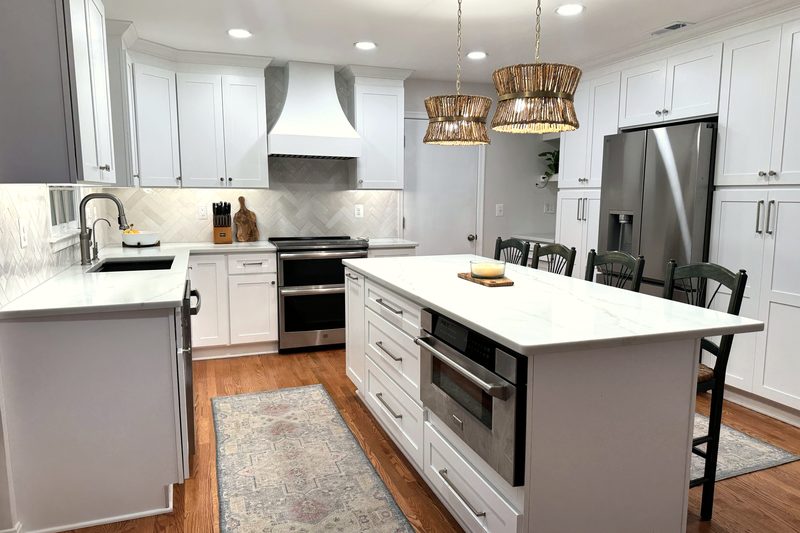 TBG project · Millersville
Kitchen remodels
Layouts, cabinets, counters and full gut renovations.
 Representative photo
Bathroom remodels
Primary baths, hall baths and accessibility upgrades.
 Representative photo
Additions
Bump-outs, second stories and in-law suites.
 Representative photo
Basement finishing
Living space, egress, bathrooms and waterproofing.
 Representative photo
New custom homes
Build on your lot with a registered Maryland home builder.
 Representative photo
Decks & exteriors
Decks, porches, siding, windows and roofing.
Common questions
Who issues building permits in Elkridge?
Howard County's Department of Inspections, Licenses and Permits (DILP), through the county's online Citizens Access Portal.
Who does the work?
An independently owned contractor licensed by the Maryland Home Improvement Commission (and, for new homes, registered as a Maryland home builder). TBG makes the introduction; you contract directly with the builder.
Does matching cost anything?
No. It is free to homeowners. TBG is paid by its partner contractors.
How much of a deposit can a contractor take?
Under Maryland law, a home improvement contractor can collect no more than one-third of the contract price when the contract is signed.


