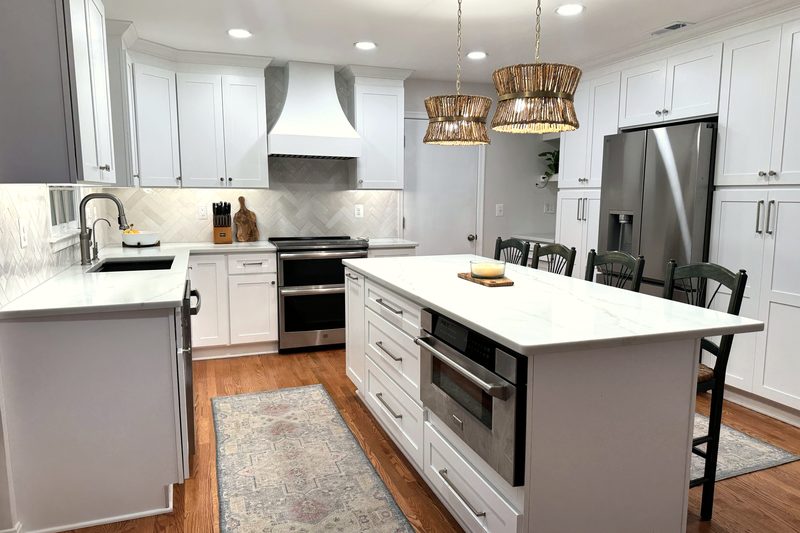

Across Anne Arundel County you'll find a few house types again and again: one-story ramblers, split-levels, two-story colonials, Cape Cods, converted waterfront cottages and, in Annapolis, historic homes. Here is what usually works for each, plus the local rule that most often changes the plan.
1. Ramblers (one-story ranch homes)
Common issues: closed-off kitchens, small baths, low ceilings and limited storage. Remodels that work: opening the kitchen to the living area (check which walls carry the roof), a primary suite carved from two small bedrooms, or vaulting ceilings where the roof framing allows. Adding space: a second story is a big structural project, so have an engineer check the foundation and walls first. Local twist: near the water, going up adds space without adding Critical Area lot coverage.
2. Split-levels
Common issues: chopped-up half-floors, dark entries and a lower level that feels like a basement. Remodels that work: opening the main-level kitchen toward the living room, reworking the stairs and railings to brighten the entry, and finishing the lower level as a family room, office or guest suite with egress windows. Watch for: moisture in the lower level; fix drainage and grading before finishing it.
3. Two-story colonials
Common in planned communities such as Crofton (founded in 1964) and across Severna Park, Gambrills and Odenton. Common issues: a formal living and dining room that goes unused, and a kitchen cut off from the family room. Remodels that work: merging the kitchen, dining and family room into one space, converting the formal living room into an office, a primary-suite addition over the garage, and a finished basement. Local twist: many neighborhoods have community covenants; check before changing the exterior.
4. Cape Cods
Common issues: cramped upstairs rooms under sloped ceilings and a single bath. Remodels that work: a shed or gable dormer to turn the upper floor into full-height bedrooms and a second bath, plus insulating the knee walls and roof properly while it's open. Dormers add space without adding to the footprint.
5. Waterfront cottages
Many waterfront communities, such as Mayo and Shady Side, began as summer cottages that have since been winterized. Common issues: shallow or pier foundations, undersized framing, old wiring and low floors near the flood level. Remodels that work: often a staged rebuild rather than a cosmetic update. Local twist: check the 50% flood rule before pricing a big renovation, and plan around Critical Area and septic limits.
6. Historic homes in Annapolis
Common issues: old structure and systems behind facades that must be preserved. Remodels that work: modern kitchens and baths inside, sensitive rear additions, and restoring rather than replacing original windows. Local twist: inside the Annapolis historic district every exterior change needs a Certificate of Approval from the Historic Preservation Commission; see our permit guide.
For every house type
Homes built before 1978 may contain lead paint, and contractors who disturb painted surfaces must be certified for lead-safe work. Older homes often hide outdated wiring or plumbing, so keep a contingency in the budget. And whatever the house, hire a contractor licensed by the Maryland Home Improvement Commission; our hiring checklist covers what to check.